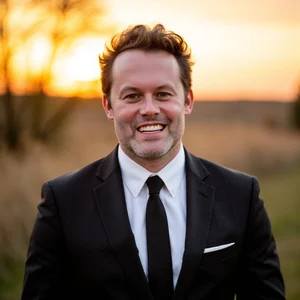
Recording Bands, Audio Engineering, and Studio Life | Adam Lee
Recording music sounds romantic until you remember that someone has to actually make it work.
The band has to show up prepared enough to capture something real. The engineer has to understand the room, the microphones, the gear, the people, the time, the money, the tension, and the tiny psychological disaster that can happen when someone has to do the same take 47 times.
In this episode of Maxwell’s Kitchen, I talk with Adam Lee, an audio engineer at Jackpot! Recording Studio in Portland, Oregon, about recording bands, making records, studio life, and what actually happens on the other side of the glass.
Adam has worked with artists including Portugal. The Man, Sleater-Kinney, Stephen Malkmus and the Jicks, Black Thought, Dame D.O.L.L.A, Built to Spill, Quasi, The Decemberists, Red Fang, and Jerry Joseph.
In This Episode
Recording bands in the studio
Audio engineering and music production
Jackpot! Recording Studio in Portland
Four-track reel-to-reel recording
Tape machines, Pro Tools, and digital recording
Moving from Phoenix to Portland
Working with bands and artists
Why engineers shape the final record
Studio psychology and trust
First takes vs. too many takes
Live performances vs. perfect recordings
Analog recording and tape
Radiohead, Kid A, and music memories
The 27 Club and creative pressure
Budgets, burnout, and surviving in music
Why making records still matters
Guest
Adam Lee
Audio Engineer
Adam Lee has been making records in Portland for over 10 years. Some of the bands he has worked with include Portugal. The Man, Sleater-Kinney, Stephen Malkmus and the Jicks, Black Thought, Dame D.O.L.L.A, Built to Spill, Quasi, The Decemberists, Red Fang, and Jerry Joseph.
Adam moved from Phoenix to Portland in 2009 after studying audio at MCC, and landed at Jackpot! shortly after. Aside from engineering, he has also scored and mixed films, produced children’s audio books, and captured live performances around the city.
Jackpot! Recording Studio
https://jackpotrecording.com/
Adam Lee at Jackpot!
https://jackpotrecording.com/engineers/
From Four-Track Tape to Jackpot!
Adam’s recording story starts in high school.
He wanted to record his band, found out studio time was expensive, and started figuring it out himself. That meant a four-track reel-to-reel machine, strange cables, confusing signal flow, and a lot of trial and error before recording music was as simple as pulling out a phone.
That is one of the best parts of this conversation.
Adam came up right at the edge of the digital shift. He had to learn the physical side of recording before everything became easier, faster, and more available. Tape, early interfaces, microphones, Pro Tools, demos, dorm room recordings, all of it became part of how he learned to solve problems.
Which is basically the job.
A recording engineer is partly a technical person, partly a producer, partly a therapist, partly a traffic cop, and partly the person in the room who has to say, “That was not it. Do it again.”
Very fun. Very healthy. Definitely no pressure.
The Engineer as the Fifth Member
One of the big ideas in this episode is that the engineer is not just there to press record.
The engineer changes the session.
A mic choice changes the record. A take choice changes the record. A comment over talkback changes the room. A bad attitude can poison everything. A good one can make a nervous musician feel like they actually belong there.
Adam talks about respecting the artist’s process, even when the music is not his taste or the band is not famous. Someone may have spent years writing songs before they walk into the studio. They may be spending money they do not really have. They may be putting their entire weird little dream on the line for a weekend.
That deserves care.
And if the band trusts the engineer, the engineer can become almost like another member of the band: helping shape performances, encouraging the quiet person in the room, telling the truth when something is not working, and trying to pull the best version out of everyone before the clock runs out.
Perfect Takes vs. Real Takes
A huge part of recording is figuring out what “good” actually means.
Sometimes the cleanest take is not the best take.
Sometimes the first or second take has the energy, and the 30th take has the correct notes but no blood in it. Sometimes a band needs repetition to find the song. Sometimes they need a break. Sometimes they need a pep talk. Sometimes they need someone to stop being nice and tell them the truth.
We talk about live performances, old records, Aretha Franklin, Bob Dylan, The Beatles, and the kind of accidental magic that happens when real people play together in a room.
That is the stuff that is hard to fake.
You can edit a song until it is technically perfect. That does not mean anyone will feel anything.
Tape, Pro Tools, and the Black Magic of Recording
One of my favorite moments in this episode is when Adam talks about recording as a kind of black magic.
You make microphones out of materials from the earth. You run electricity through them. They capture air. That signal moves through cables, tape, converters, faders, speakers, and somehow turns into emotion.
That is insane.
We are used to recorded music now, so it feels normal. But for most of human history, if you wanted to hear music, someone had to be in the room making it. Recording changed that completely.
Now you can capture a moment, replay it, edit it, ruin it, save it, polish it, overthink it, and maybe, if everyone gets lucky, make something that still feels alive.
Music, Memory, and Growing Up
This conversation also turns into a lot of music-memory talk, because of course it does.
Radiohead comes up. Kid A comes up. Mariah Carey comes up. The 27 Club comes up. So does that very specific feeling of hearing a song at the right time when you are young and it somehow rearranges your brain.
That is the thing about music.
The song is never just the song.
It is where you were. Who you were with. What car you were in. What you were avoiding. What you were hoping for. What you did not understand yet. The memory attaches itself to the sound, and years later some song comes on in a store and suddenly you are back there.
Annoying, but impressive.
Studio Life Is Not Normal Life
Adam also talks honestly about the weirdness of making a life in music.
The hours are strange. The money is not always reliable. The last 10 percent of a record can be brutal. The personal life does not always fit neatly around the studio life.
You might work all day. You might sleep in pieces. You might spend money on gear that makes perfect sense to you and looks insane to anyone who wants a normal future.
But there is also something incredible about it.
Every session is different. Every artist brings a different problem. Every record has its own little world. You do not know if someone is going to come in and play something forgettable, something great, or something that only becomes great because the right people were in the room long enough to catch it.
That is a pretty good reason to keep showing up.
Quick Takeaways
Recording bands is technical, but it is also deeply psychological.
The engineer can shape the final record without being in the band.
A great take is not always the cleanest take.
Live musicians in a room still matter.
Tape forced commitment in a way digital recording does not.
Pro Tools is the studio language because everyone speaks it.
Budget affects how long a record gets to find itself.
The first take can be the best take if the band is ready.
Honesty saves time and usually makes the music better.
Making records is unstable, exhausting, weird, and still kind of magical.