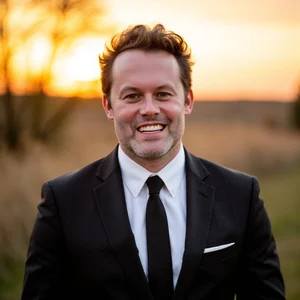
What a Forensic Pathologist Actually Does with Dr. Sean Hurst
Forensic pathology is one of those jobs most people think they understand because they have seen enough true crime shows to feel confident.
And then you talk to an actual medical examiner and realize the real version is slower, more careful, more medical, and a lot more human than TV makes it look.
In this episode of Maxwell’s Kitchen, I talk with Dr. Sean Hurst, a forensic pathologist and medical examiner in Oregon, about autopsies, death investigations, cause and manner of death, unidentified remains, forensic science, cold cases, courtroom testimony, and what families need after someone dies.
This conversation gets into the work behind the work: how medical examiners help determine what happened, how they collaborate with law enforcement, why criminal cases are only part of the job, and what forensic pathology can and cannot explain after death.
In This Episode
What a forensic pathologist actually does
How medical examiners determine cause and manner of death
What happens during an autopsy
How death investigations work
Why medical examiner work is different from police work
How medical examiners work with law enforcement
Why criminal cases are only part of the job
How unidentified remains are investigated
Dental records, DNA, and genetic genealogy
Why some deaths are difficult to explain
The limits of postmortem testing
Cold cases and unidentified remains
Court testimony and expert witnesses
The emotional toll of forensic pathology
Why true crime and TV often get the job wrong
Guest
Dr. Sean Hurst
Forensic Pathologist
Sean Hurst is a forensic pathologist working in Oregon. He earned his undergraduate degree in biology from Seton Hall University, then received his MD from St. George’s University. He completed an anatomic and clinical pathology residency in New Jersey and trained in forensic pathology in Miami, Florida.
He moved to Oregon almost five years ago to become a Deputy State Medical Examiner and has served as Chief Medical Examiner for about four years.
Outside of work, Dr. Hurst is an avid baker. He and his wife can usually be found fostering dogs and kittens for rescues around Portland.
What a Forensic Pathologist Actually Does
A forensic pathologist is a doctor who helps investigate death from the medical side.
That means determining cause and manner of death, performing autopsies, reviewing medical history, examining injuries or disease, collecting information from investigators, and sometimes testifying in court.
The public version of this job is usually murder, mystery, and dramatic lab lighting.
The real version is much broader.
Dr. Hurst explains that criminally sensitive cases, like homicides, are only a small percentage of the overall work. A lot of the job is about understanding what happened medically, documenting it clearly, and helping families get answers during one of the worst moments of their lives.
Still a very normal casual Tuesday.
Autopsies, Death Investigations + Cause of Death
One of the clearest parts of the conversation is the difference between the medical side of a death investigation and the law enforcement side.
Law enforcement may be trying to figure out whether a crime occurred, who was involved, or what happened at a scene.
A medical examiner is focused on the body, the medical evidence, the person’s health history, injuries, toxicology, and the cause and manner of death.
Those two sides can work closely together, especially when a case may involve homicide or another criminal element. But Dr. Hurst makes it clear that forensic pathology is not about “cracking the case” like a detective show. It is about being objective, careful, and accurate.
Which, weirdly, makes it more interesting.
Unidentified Remains, DNA + Genetic Genealogy
We also get into what happens when remains are found years later, sometimes after the body has decomposed to the point where only bones are left.
That is where things like dental records, DNA, missing persons reports, personal effects, and genetic genealogy can become important.
Dr. Hurst explains why dental records are often one of the most reliable ways to identify someone, why DNA testing has become more advanced, and why genetic genealogy can help connect unidentified remains to family trees.
But he also points out that DNA is not magic.
You still need something to compare it to. You still need records, relatives, context, and a careful process. The technology is amazing, but it is not a button someone presses that says, “case solved.”
A little disappointing for TV. Much better for reality.
What Forensic Pathology Can Miss
One of the most interesting parts of the episode is what forensic pathology cannot always prove.
Dr. Hurst explains that some medical conditions are difficult to diagnose after death, especially when they involve function rather than visible structure. Certain heart rhythm problems, for example, may cause death quickly without leaving obvious physical signs.
That does not mean the work failed.
It means the human body is complicated, and even with autopsies, microscopes, toxicology, x-rays, CT scans, DNA testing, and medical history, there are still limits to what can be known.
That honesty is part of what makes the conversation useful.
The Human Side of Medical Examiner Work
This episode is not just about autopsies and forensic science.
A big part of the conversation is about families.
Dr. Hurst talks about communicating with family members after a death, explaining findings, protecting confidentiality, and helping people understand what happened. He also talks about the emotional toll of the job, vicarious trauma, desensitization, and the importance of checking in with yourself when your work involves difficult material every day.
That part stuck with me.
Because from the outside, you think of this as a job about death.
But when it is done well, it is also a job about helping the living.
True Crime vs. Real Forensic Pathology
We also talk about why TV and true crime often get this work wrong.
Real death investigation is not usually one fingerprint, one dramatic reveal, and one perfect answer before the commercial break.
It is paperwork, collaboration, uncertainty, medical judgment, objective findings, legal process, and sometimes waiting for more information. It can involve law enforcement, families, toxicology, court testimony, outside experts, and other agencies.
Less flashy.
More real.
Probably worse lighting.
Quick Takeaways
Forensic pathologists are doctors who investigate death from the medical side.
Medical examiners determine cause and manner of death, but they are not the same as police detectives.
Autopsies are only one part of death investigation.
Criminal cases are important, but they are a smaller percentage of the overall work than most people assume.
Dental records, DNA, and genetic genealogy can help identify remains, but none of them are magic by themselves.
Some causes of death are hard or impossible to prove after death.
The job requires objectivity, confidentiality, and communication with families.
The emotional toll is real, even for people who choose this work and care deeply about it.
True crime makes the job look faster and cleaner than it usually is.
The real work is careful, medical, human, and extremely important.