Kayci Mitchell had been in abstinence-based recovery since she was 18. When a friend started working with an ibogaine clinic in Mexico, using psychedelics in addiction recovery seemed far outside the boundaries of the life she knew.
Then people traveling to and from the clinic began staying at her home in Redondo Beach. She met them before treatment and saw them again afterward. The changes she observed made her curious about something she had previously struggled to understand.
They also brought her attention to what happened next. People could return from an intense experience with enormous expectations, then go home to the same habits, relationships, and circumstances they had left.
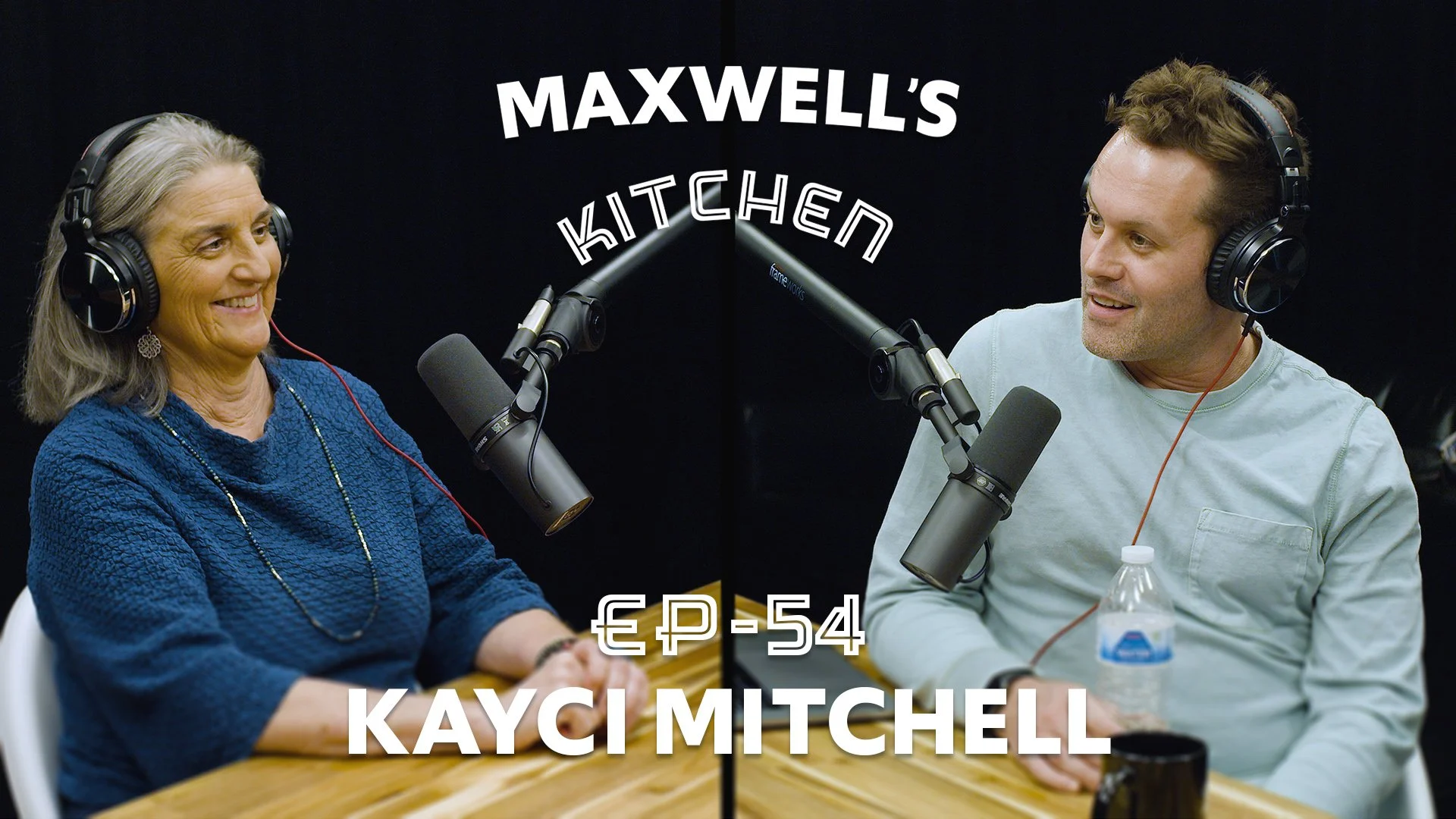
In this episode of Maxwell’s Kitchen, Kayci and I discuss psychedelics, trauma, addiction recovery, and the preparation and integration work that became central to her approach. I ask about difficult experiences, share one of my own, and try to understand what supporting someone through that process actually involves.
In This Episode
Kayci’s background in abstinence-based recovery
Her introduction to an ibogaine clinic in Mexico
Preparation and expectations before a psychedelic experience
Integration and changes in everyday life
Her perspectives on psilocybin, LSD, MDMA, ibogaine, and DMT
Microdosing versus larger psychedelic experiences
Difficult journeys and the need for support
My frightening experience with DMT
Addiction stigma and drug policy
Commercial interests entering the psychedelic field
Community through Portland Psychedelic Society
What Kayci means by holding space
Guest
Kayci Mitchell
Kayci Marie Mitchell is a psychedelic integration coach, educator, journey guide, and founder of Into the Looking Glass. Her background includes decades in addiction recovery and work connected to ibogaine treatment facilities and preparation and integration services.
She also facilitates support and educational discussions with Portland Psychedelic Society. In our conversation, she describes how her understanding of recovery expanded beyond the abstinence-based framework she first knew.
Watching Something She Did Not Expect
Kayci’s introduction to psychedelic work happened through a friend involved with a treatment center in Baja California. At first, the connection between psychedelics and recovery did not make sense within her experience of sobriety.
Living near Los Angeles International Airport put her in a position to meet people passing through on their way to Mexico. Some stayed at her house before going to the clinic and returned afterward.
Kayci describes being struck by the differences she saw. These were people whose experiences with addiction had sometimes included repeated attempts at treatment. Hearing their stories encouraged her to investigate the clinic’s approach.
She became interested in ibogaine and the other substances people described, but she also noticed a gap. Some approached the experience as though completing it would resolve the rest of their lives.
That expectation became one of the subjects she wanted to address.
What Happens When You Go Home?
When Kayci talks about integration, she means the work of examining an experience and deciding how it relates to ordinary life.
Someone might return with a different perspective, but their routines do not automatically change. Their relationships, living situation, and sources of stress may still be waiting for them. Kayci wants people to consider those circumstances before the experience and have support afterward.
Preparation, in her approach, includes discussing intentions and what a person hopes will be different. Integration involves exploring what came up and identifying changes they want to make.
She mentions journaling, meditation, conversations with a therapist or coach, and relationships with people who can listen. Her emphasis is on an ongoing process rather than a single event that does all the work.
That is the part I keep returning to with questions. A person can have an experience that feels enormous. What do they do with it on a normal Tuesday?
Different Experiences, Different Expectations
We discuss ibogaine, psilocybin mushrooms, LSD, MDMA, and DMT. Kayci shares her understanding of their differences and the experiences people have described to her.
When I ask whether she uses ibogaine in her own work, she distinguishes her interest in it from the services she provides. She describes the clinic’s approach as medically intensive, involving screening and monitoring.
Later, she says her guiding work primarily involves psilocybin and MDMA. She also draws a distinction between assisting another facilitator and personally administering a substance she does not feel comfortable serving.
The conversation includes her spiritual interpretations of psychedelic experiences, including feelings of connection, changes in perspective, and questioning familiar assumptions. Those are central to how she understands her work.
I recognize parts of what she describes from my own experiences. Explaining them to someone else, though, can be surprisingly difficult. We talk about how an experience can feel profoundly meaningful while remaining hard to put into words.
When the Experience Is Frightening
I tell Kayci about taking DMT without knowing that was what I had been given. I did not know how long it would last, and I became afraid I was not coming back.
It was terrifying.
That memory gives me a different question from simply asking what someone might gain. What happens when the experience is overwhelming? Can a person come away feeling worse? Who helps them make sense of it?
Kayci describes someone attending an intense retreat and returning straight to a life where nobody understands what happened. Without people to talk to, the experience can feel disconnected from everything around them.
She places considerable importance on support afterward. Her interpretation is that difficult experiences may contain material a person needs help exploring. I ask how that process works and whether it can continue over months or years.
Her answer keeps coming back to knowing the person, understanding their circumstances, and having relationships that extend beyond the experience itself.
Why Community Matters to Her
Through Portland Psychedelic Society, Kayci facilitates discussions where people can share experiences and hear from others.
She values the opportunity to talk without having to explain every part of the subject from the beginning. Someone struggling to describe an experience may find it easier among people familiar with the language and questions.
Community also connects to her concerns about ethics. She acknowledges that people entering this field may encounter individuals whose conduct or intentions deserve scrutiny. Her enthusiasm for the subject does not mean she trusts everyone involved in it.
The groups she describes are part of the educational side of her work. She wants people to ask questions, understand different approaches, and think about the support they have available.
Recovery, Stigma, and the Business Around It
Our discussion expands into drug policy, attitudes toward addiction, and the financial interests surrounding both pharmaceuticals and psychedelic services.
Kayci is concerned about people being judged for becoming dependent on substances while businesses profit at different stages of their experience. She also acknowledges that treatment organizations vary and that people can find meaningful help within them.
I ask whether drug use always comes from pain. Sometimes people want an enjoyable experience, and I wonder how that fits into the conversation.
We do not resolve every question, but the exchange brings out an important part of her perspective: she wants to understand the individual rather than reduce them to a label.
We also discuss Oregon’s psychedelic initiatives and her expectations about the field becoming more widely accepted. She is optimistic about access and education, while questioning how commercial and conventional medical settings will approach experiences that require considerable time and personal attention.
What She Means by Holding Space
Toward the end, I ask Kayci what she actually does when someone is struggling during a journey.
She describes listening, offering reassurance, and responding to the person in front of her. In her own work, she says, she generally spends substantial time with someone beforehand so she understands their intentions and knows them beyond that moment.
The phrase “holding space” can sound abstract until she talks about that familiarity. She means staying present with someone through an experience they may find difficult to describe, while drawing on the relationship established beforehand.
What stands out across the conversation is how often she brings the subject back to preparation and what follows. Even when I ask about the most powerful or life-changing substance, she returns to the person, the circumstances, and the work around the experience.
Kayci shares her experiences, beliefs, and interpretations in this interview. The conversation is not medical advice or a guide to taking psychedelics.
Useful Links
Watch Kayci Mitchell’s Interview on YouTube
https://www.youtube.com/watch?v=wdnPo1PspMY
Explore More Maxwell’s Kitchen Interviews
https://maxwellskitchenpodcast.com/podcast/interviews
More Interviews
Jason Conley on Prison, Addiction, Recovery, and Education
https://maxwellskitchenpodcast.com/maxwells-kitchen-podcast/2022/07/07-episode-jason-conley
Jason describes years of addiction and incarceration, the difficulty of rebuilding after release, and how education helped him imagine a different life.
Shane Ervin on Turning Life Around After Addiction
https://maxwellskitchenpodcast.com/maxwells-kitchen-podcast/2020/6/28/episode-10-shane-ervin
Shane and I revisit growing up in The Dalles before discussing his experience with substance abuse and recovery. Video ends partway through the episode, but the audio continues.