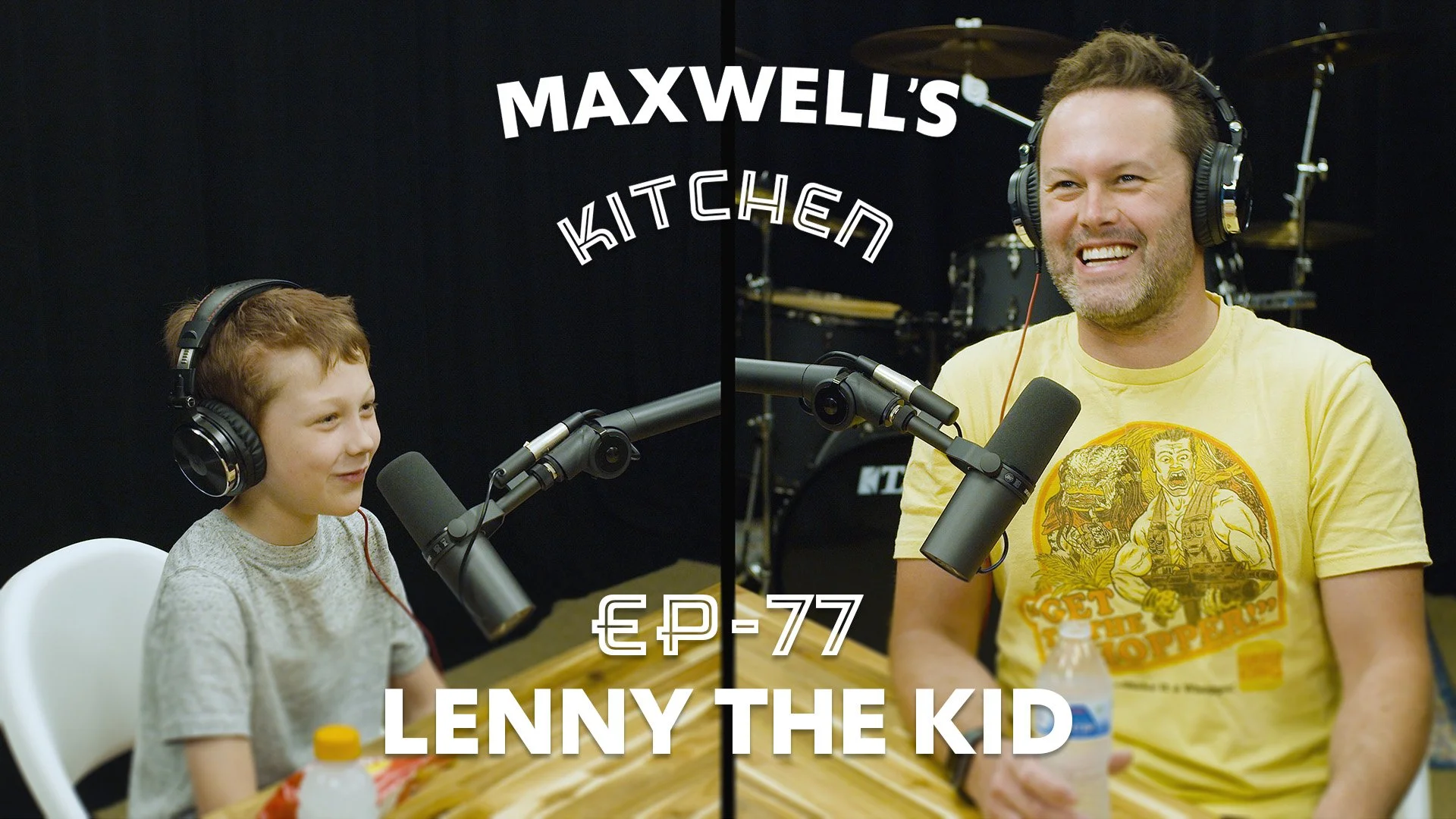
This one is one of my favorites because there is no expert, no complicated subject, and absolutely nobody involved who has done any research.
It is just me sitting down with my 8-year-old son Lenny and asking him to explain how life works.
He begins by introducing himself as Mike Johnson, which immediately establishes the level of credibility we are dealing with. From there, we get into adulthood, getting old, money, jobs, houses, Jordan 1s, cell phones, and the financial burden children apparently place on otherwise prosperous adults.
Some of his numbers are questionable.
His confidence is not.
In This Episode
When you officially become old
The difference between an adult and a grandpa
Why being a kid is better than being an adult
Why adults have to work
How much kids cost
Food, water, shelter, and Jordan 1s
The best age to be a kid
When kids should get a cell phone
How much money adults make
How much houses cost
Lenny's understanding of personal finance
Getting roasted by your own child
When Does an Adult Become Old?
I was 38 when we recorded this episode, so naturally I wanted to know when Lenny thought a person became old.
His answer was 38.
Not 60. Not 70. Not some distant age I could comfortably laugh about.
Thirty-eight.
Apparently 26 is when you become an adult, 38 is when you become an old man, and somewhere around 58 you qualify as a grandpa. He arrives at these numbers with enough confidence that I briefly start wondering whether he knows something I don't.
There is also no grace period. According to Lenny, I was apparently fine at 37 and crossed directly into old-man territory when the birthday arrived.
Kids are ruthless.
Being a Kid Is Obviously Better
When I ask whether it is more fun to be a kid or an adult, Lenny does not need time to think.
Kid.
His reasoning is actually pretty solid. Adults have to go to work every day, while kids get to spend most of their time doing considerably more interesting things.
Why do adults work so much?
Because they need money for their children.
This leads us into a discussion about what exactly children need. Lenny starts with the basics: food, water, and shelter.
Then comes the fourth essential category.
Jordan 1s.
I point out that this may be part of the reason children are so expensive, but Lenny is unconvinced. He is also deeply unimpressed when I tell him about the Jordans I owned as a kid, informing me that I have apparently always been an old grandpa dad regardless of what shoes I wore.
This interview is going extremely well for me.
An 8-Year-Old Explains Money
The economics section is where everything really comes together.
I ask Lenny how much a regular person makes in a year.
About $5,000.
Fair enough.
Then I ask how much a normal job pays by the hour.
About $50.
There are some accounting problems here, but we continue.
A non-cheap house, according to Lenny, costs approximately $1 million. So in his version of the American economy, the average person earns $50 an hour, somehow ends the year with $5,000, needs to buy a million-dollar house, and becomes even more financially unstable after having children because those children require food, water, shelter, and expensive sneakers.
Honestly, only some of this sounds wrong.
What I love about the conversation is hearing him try to assemble a model of adult life from all the pieces he has picked up around him. Kids hear us talk about jobs, mortgages, money, bills, houses, shoes, and how expensive everything is. They understand the basic relationships long before they understand the math.
Adults work because things cost money.
Kids cost money.
Houses cost an absurd amount of money.
So far, he is doing pretty well.
Seven Is Apparently the Peak
Lenny also informs me that seven is the best age to be a kid.
Unfortunately, he is already eight when we are having this conversation, which means he has apparently peaked.
He does not seem particularly concerned.
There is another milestone coming anyway.
Nine is the correct age to get a cell phone.
He says this immediately and with enough certainty that I suspect the answer may have been prepared before the interview. Apparently I have one year to get comfortable with the idea.
This is the danger of giving your kid a microphone. Eventually they start negotiating in public.
The Part I Actually Remember
Most of this episode is ridiculous.
That is why I like it.
It captures Lenny at a very specific age where he understands enough of the world to have opinions about it but not quite enough to realize how funny those opinions sound to an adult.
Those moments disappear quickly.
A kid who thinks 38 is ancient becomes a teenager. The kid asking when he gets a phone eventually has one glued to his hand. The little economic theory about $5,000 salaries and million-dollar houses gets replaced by an actual understanding of what things cost.
Then, right at the end of this goofy eight-minute conversation, I tell him I want him to know something.
Before I can say it, he answers for me.
"I know you love me."
Then he tells me I'm his best friend.
That is the part that stayed with me.
The terrible financial advice is a close second.
Useful Links
Watch This Episode on YouTube
https://youtu.be/btWcHb9z36E
More Maxwell's Kitchen
https://maxwellskitchenpodcast.com
More Episodes
Understanding Money: Spending Habits and Self-Worth
https://maxwellskitchenpodcast.com/maxwells-kitchen-podcast/money-mindset-value-spending-habits-purchases
Lenny's version of personal finance is considerably more entertaining, but this episode looks at the adult side of money: spending, identity, value, and the stories we tell ourselves about what things are worth.
Why Do We Feel Embarrassed and How to Care Less
https://maxwellskitchenpodcast.com/maxwells-kitchen-podcast/why-do-we-feel-embarrassed
Another look at something that changes dramatically as we grow up. Kids can be wonderfully unconcerned with embarrassment, while adults somehow learn to turn tiny awkward moments into full internal investigations.