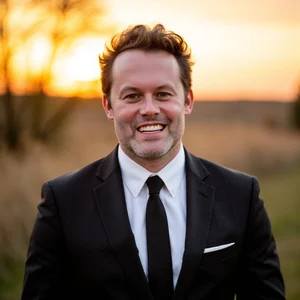
Graham Talley on Float Tanks, Sensory Deprivation, and Float On
Graham Talley is one of the founders of Float On, a Portland float center that opened in 2010 and became one of the major names in the modern float tank industry.
In this episode of Maxwell’s Kitchen, Graham explains how sensory deprivation tanks work, why people float, what the first float can feel like, and how the practice evolved from early research experiments into modern float centers. We talk about John C. Lilly, Epsom salt, soundproof rooms, meditation, psychedelics, physical recovery, mental health, and the surprisingly complicated business of helping people spend time with nothing but themselves.
Before the interview, I went to Float On and tried floating for the first time. That gave the conversation a real place to start. I wanted to understand what it feels like to get into a tank, shut off the lights, put your ears under the water, and see what happens when there is almost nothing left to react to. Sometimes the hardest part of life is just finding a way to chill out and let go.
The conversation starts with floating, but it does not stay there. Graham and I also talk about productivity, comfort zones, trying things that make you nervous, rolling dice to make decisions, and why doing nothing can be so difficult when your brain is trained to always move toward the next task.
In This Episode
What a float tank is and how floating works
The difference between old sensory deprivation tanks and modern float tanks
Why float tanks use Epsom salt
What happens during a first float
The history of floating and John C. Lilly
How Float On opened in Portland in 2010
Why building a float center is harder than it looks
Soundproofing, waterproofing, filtration, and salt damage
Floating as a tool for meditation, stress relief, recovery, and self-awareness
The connection between floating, psychedelics, and inward exploration
Float Tank Solutions, HelmBot, and the Float Conference
Graham’s earlier work designing custom treasure hunts
Rolling dice to make decisions and expand your comfort zone
Guest
Graham Talley
Founder of Float On, Float Tank Solutions, and HelmBot
Graham Talley helped start Float On in Portland, Oregon, and has spent years working in and around the float industry. In addition to running a float center, he has helped support other float businesses through consulting, software, training, conferences, and educational resources.
In this episode, he brings a mix of float history, business experience, technical knowledge, and curiosity about why people seek out unusual experiences in the first place.
Useful Links
Float On
https://floathq.com/
Float Tank Solutions
https://www.floattanksolutions.com/
What Is a Float Tank?
https://www.floattanksolutions.com/what-is-a-float-tank/
HelmBot Software
https://helmbot.com/
Float Conference Past Talks
https://www.floatconference.com/videos
About Float Tanks: An Introductory Guide
https://www.floattanksolutions.com/product/about-float-tanks-an-introductory-guide/
Programming and Metaprogramming in the Human Biocomputer by John C. Lilly
https://www.amazon.com/Programming-Metaprogramming-Human-Biocomputer-Experiments/dp/0692217894
What Is a Float Tank?
A float tank is designed to reduce sensory input. Modern float tanks usually use warm water mixed with a high concentration of Epsom salt, which makes the body float with very little effort. The water is kept close to skin temperature, the room is quiet, and the experience is usually done in darkness or low light.
Graham explains that the tank itself is not the miracle. It is a controlled environment that removes many of the normal inputs your body and mind are constantly processing. That can make the experience physically relaxing, mentally challenging, emotionally useful, or just strange in a way that is hard to explain until you try it.
My First Float
Before recording this episode, I went to Float On and tried floating for the first time.
At first, I was more tense than I expected. My neck would not relax, my ears did not want to go under the water, and I kept wondering what I was supposed to be doing. That is a funny problem to have in a tank where the entire assignment is basically to stop doing things.
Once I settled into it, the experience started to make more sense. The body relaxes slowly. The room disappears. Time gets strange. Your mind keeps trying to return to normal life, but the environment does not give it much to work with.
That was the part I found most useful. Floating made it obvious how hard it can be to stop, even when there is literally nothing else to do.
Floating, Meditation, and Mental Noise
A big part of this conversation is about mental noise.
Graham describes floating as something that can support meditation because the tank removes many of the distractions that usually compete for attention. You are not checking your phone, reacting to sounds, adjusting to temperature, or moving through space in the usual way.
That does not mean every float is dramatic. Graham is careful about that. Some people have a powerful first experience. Other people spend most of the first float learning how to relax their neck and stop wondering how much time is left.
That honesty is one of the things I liked about the conversation. Floating can be useful without needing to be oversold. For some people, it is physical recovery. For others, it is stress relief, body awareness, meditation practice, creative thinking, or a rare break from the constant noise of normal life.
Building and Running a Float Center
One of the most interesting parts of the episode is Graham’s explanation of how hard it is to build and operate a float center.
A float room has to deal with water, salt, heat, humidity, filtration, privacy, cleaning, soundproofing, waterproofing, and constant maintenance. Graham talks about how Float On had to learn many of those lessons the hard way, including rebuilding rooms, replacing materials, and figuring out what salt does to floors, walls, equipment, shoes, and sanity.
That experience eventually became part of Float Tank Solutions, where Graham and the Float On team helped other float centers avoid some of the same mistakes.
It is a good reminder that every simple-looking business usually has a giant technical iceberg underneath it.
Beyond Floating
The conversation eventually turns into something bigger than float tanks.
Graham talks about designing real-life treasure hunts before he entered the float world, building businesses around unusual ideas, and using dice to make decisions when too many options seem possible. His rule is simple: if you put something on the list and the dice choose it, you do it.
I liked that because it connects back to the float tank in a weird way.
Floating is one way to go inward. Rolling dice is one way to move outward. Both are ways of interrupting the autopilot version of yourself that keeps choosing the familiar thing because it is easier.
That is where this episode gets interesting to me. It starts as a conversation about sensory deprivation tanks, but becomes a conversation about curiosity, fear, stillness, and the difference between reading about an experience and actually doing it.
Quick Takeaways
Float tanks use warm, salt-dense water to help the body float with very little effort.
Modern floating grew out of early sensory deprivation research, including the work of John C. Lilly.
The first float can feel strange because the body and mind are adjusting to a new environment.
Floating can be used for relaxation, meditation, stress relief, body awareness, and recovery.
Running a float center requires serious technical planning, especially around salt, water, soundproofing, and cleaning.
Float On opened in Portland in 2010 and later expanded its work through Float Tank Solutions, HelmBot, and the Float Conference.
The episode also explores productivity, fear, curiosity, decision-making, and why unfamiliar experiences can be useful.
More Interviews
Why Couples Stop Having Sex with Alana Ogilvie
https://maxwellskitchenpodcast.com/maxwells-kitchen-podcast/is-sex-therapy-right-for-your-relationship
Scott Burns on the Missoula Floods and Pacific Northwest Geology
https://maxwellskitchenpodcast.com/maxwells-kitchen-podcast/2023/02/16-episode-106-scott-burns
The History of Salt with Mark Bitterman
https://maxwellskitchenpodcast.com/maxwells-kitchen-podcast/2023/04/12-episode-111-mark-bitterman-the-history-of-salt-from-a-james-beard-award-winning-author
About This Episode
This episode is part of the Maxwell’s Kitchen interview archive. The travel guides are the front door now, but the archive still includes conversations with people who know strange, useful, specific things.
This one starts with float tanks and ends up somewhere broader: how to slow down, how to try unfamiliar things, and why the inside of your own head can be a pretty interesting place to visit. Check out other episodes to get amazing glimpses into the minds and hearts of interesting individuals.