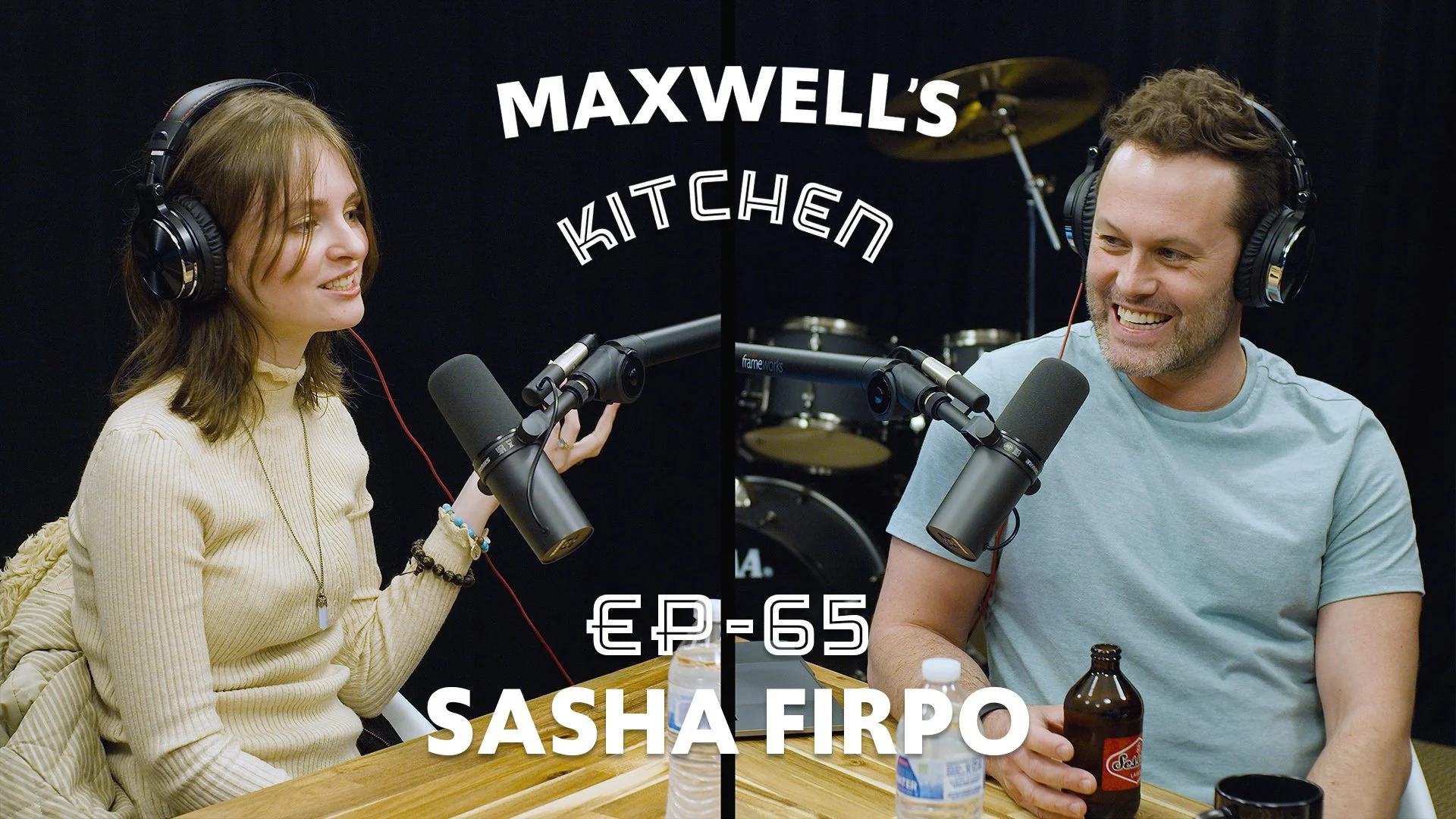
Sasha Firpo can fall in love without feeling sexual attraction. They can also feel feminine, masculine, or neither without looking particularly different to someone meeting them for the first time.
Those are experiences I don’t share, and I came into this conversation with plenty of questions. Some were more gracefully worded than others.
In this episode of Maxwell’s Kitchen, Sasha talks about gender fluidity, pronouns, asexuality, relationships, and finding language that helped them understand themselves. They explain what those things mean in their own life, push back on some of my assumptions, and make me laugh throughout.
Sasha is also an artist and writer, so the conversation eventually moves into creative frustration, online games, food-service jobs, and the pressure to make money from everything you enjoy. My predictions about the metaverse receive a fairly skeptical reception.
In This Episode
Sasha’s experience of gender fluidity
Pronouns, assumptions, and communication
Recognizing yourself in other people’s experiences
Asexuality and romantic attraction
Companionship and relationship expectations
Aromanticism and different kinds of closeness
Cyberpunk, online games, and virtual identities
Art, writing, and creative dissatisfaction
Generational differences and work
Food service, office jobs, and monetizing hobbies
Guest
Sasha Firpo
Sasha is a Portland artist and Pacific Northwest College of Art graduate with an interest in storytelling, fantasy, character-driven narratives, and games.
In this conversation, they describe themselves as gender-fluid and asexual. Their perspective comes from their own experiences and conversations within their community, alongside their life as an artist trying to find satisfying work.
Finding Words for Something That Was Already There
Sasha didn’t grow up with a complete explanation of their identity waiting to be announced. They describe learning through conversations in college and recognizing experiences that sounded familiar.
They had been comfortable being referred to as “she.” Hearing classmates discuss nonbinary identity helped them realize that “they” could feel right too. Later, they became comfortable with “he” as well.
For Sasha, gender fluidity includes feeling feminine on some days, masculine on others, and sometimes not identifying with either. They tell me they are comfortable with any of those pronouns.
I ask how someone is supposed to know that from looking at them. Sasha’s answer is that you can’t necessarily know. Appearance doesn’t communicate every part of someone’s internal experience, which is why they suggest asking instead of assuming.
They also describe being pleasantly surprised when friends began using “he.” It was something they hadn’t expected people to do because of how they presented.
Pronouns and the Difference Between a Mistake and Being Ignored
Part of my confusion comes from how people are expected to keep up, particularly when they are unfamiliar with the language.
Sasha makes a distinction between someone trying to understand and someone repeatedly disregarding a request. In their circle, a person explains which pronouns they use. Continuing to ignore that can feel hurtful because the information has already been shared.
They also separate their own comfort with different pronouns from what someone else might need. Their willingness to be called “she,” “he,” or “they” doesn’t mean everyone feels the same way.
Then I get hung up on using “they” for one person. Sasha points out that I already use it when I don’t know who someone is. Their example is an unidentified employee: you can talk about what “they” did without knowing the person’s gender.
That particular point returns much later in the conversation.
Being Asexual and Still Wanting Love
When Sasha tells me they don’t experience sexual attraction, I try to understand it through examples.
Would an attractive person on television do anything for them? What about someone they had a crush on? How does wanting a relationship work when that part isn’t there?
Sasha explains that they can recognize someone as attractive without feeling sexually drawn to them. They ask me to think about seeing a good-looking man and understanding why other people find him attractive without experiencing that attraction myself.
That helps me understand one part of it. For Sasha, that absence of sexual attraction extends to everyone.
Romantic feelings are different. They describe having crushes, falling in love, and wanting companionship. The emotional connection can be strong even when it doesn’t come with the sexual response a partner might expect.
Sasha remembers asking a friend whether people genuinely experience sexual urges the way everyone talks about them. They had thought some of it might be a joke.
The Pressure to Meet the Right Person
I ask whether meeting someone might suddenly change things. Sasha tells me that is something asexual people hear regularly.
They describe how painful it can be to love someone deeply and still be told that what you offer isn’t enough. An earlier relationship left them carrying that feeling, and they talk about still working through it.
Wanting companionship doesn’t make the conversation with a potential partner easy. Sasha anticipates having to explain that their feelings won’t necessarily take the form the other person expects.
I suggest meeting another asexual person. They point out that sharing an orientation doesn’t automatically create compatibility. They had an asexual friend in college who understood their experience, but that didn’t mean the two wanted a romantic relationship.
It is a useful correction to the idea that finding someone with the same label solves everything. They still have to like each other.
Sasha also describes an aromantic friend whose experience differs from theirs. Through that comparison, we talk about sexual attraction, romantic attraction, friendship, and wanting closeness without assuming all of those things arrive together.
The Metaverse Has Apparently Been Here for Years
When Sasha mentions cyberpunk and the appeal of being able to modify your body, I bring up the metaverse.
They are immediately unimpressed.
From their perspective, tech companies are presenting something as revolutionary that players have already experienced through online games: creating a character, choosing how to appear, meeting people, and participating in a shared world.
I keep pushing the possibilities. If a virtual world lets someone look however they want, could that offer freedom they don’t have physically?
Sasha keeps returning to the fact that you eventually log off. A virtual character doesn’t remove the importance of feeling comfortable in your own body.
We also disagree about whether everyone would choose a similar appearance if they could. I imagine people moving toward idealized bodies. Sasha compares it to art styles: people take inspiration from different places, combine different influences, and want different things.
Their point is that having more options wouldn’t necessarily make everyone choose the same one.
Making Art and Immediately Hating It
When I ask what feels gratifying to Sasha, we get into writing and drawing.
They are more confident about their writing. Finishing something they are proud of and hearing that it connected with someone feels good. Drawing can produce a very different response, closer to relief that the piece is finally finished.
Sasha talks about looking at other artists’ work and seeing everything they still need to improve in their own. Hands. Side profiles. The parts that seem to come naturally to somebody else and remain frustrating on their own page.
They can appreciate another writer’s style as different from theirs. With drawing, the comparison feels more personal.
I recognize that frustration. You can make something, hear people say it is good, and still see mostly what you wish you had done better.
Working Hard Without Wanting to Stay There
The conversation turns toward work and the expectations different generations carry about it.
Sasha describes their experience at Little Big Burger, including the physical strain of standing with scoliosis, crowded rushes, impatient customers, and a difficult assistant manager. They liked their manager, but the job became something they couldn’t keep doing.
We agree that working in food service changes how you treat the person making your food. I remember customers arriving at Quiznos just before closing, after we had already cleaned everything. Sasha has plenty of their own examples of how exhausting those interactions can become.
An office job wasn’t the answer either. As a financial assistant, Sasha found that finishing quickly meant being given additional duties. Eventually, they began delaying tasks because being efficient kept sending them toward work they didn’t want.
They describe sitting at the desk feeling as though they were wasting away. They wanted to use their abilities, but that environment wasn’t giving them much reason to care.
Does Every Hobby Need to Become an Income Stream?
Making money from creative work seems like the obvious alternative until Sasha raises another problem: what if you don’t want every enjoyable thing to become a product?
They describe sharing something they had written and receiving the suggestion that they should sell it. The response was well intended, but familiar. Something done for pleasure immediately became another possible income stream.
We talk about the tension between wanting to be paid for work you love and wanting to keep some of that love outside the demands of earning a living.
Sasha’s interests in art, writing, and storytelling are part of who they are. Turning all of them into obligations might not produce the freedom they are looking for.
The Pronoun I Was Already Using
Late in the episode, we start talking about Banksy. I don’t know who the artist is, so I naturally refer to them as “they.”
Sasha notices immediately.
We had spent part of the opening discussing whether that word could refer to one person. More than an hour later, I was using it without stopping to think about it.
The conversation ends with another disagreement. I imagine paying to experience someone else’s brain, whether that means understanding a celebrity’s life or remembering what it feels like to be seven. Sasha would rather remain themselves and ask other people about their experiences.
After an hour of asking Sasha about theirs, that seems like a reasonable place to stop.
Useful Links
Watch This Episode on YouTube
https://www.youtube.com/watch?v=iO7i9B7XbDQ
More Maxwell’s Kitchen Interviews
https://maxwellskitchenpodcast.com/podcast/interviews
More Interviews
Sex Education, Consent, Technology & Gender Identity with Kris Gowen and Leah Haas
https://maxwellskitchenpodcast.com/maxwells-kitchen-podcast/2022/12/20-episode-101-maxwells-kitchen-podcast-kris-gowen-and-leah-haas
Kris and Leah discuss communication, consent, gender, relationships, and the gaps that sex education can leave into adulthood.
Leaving a Religious Cult & Starting Over with Jaime Mathis
https://maxwellskitchenpodcast.com/maxwells-kitchen-podcast/2022/04/04-episode-66-jaime-mathis
Jaime shares her experience of questioning inherited beliefs, traveling abroad, surviving childhood cancer, and deciding which expectations she wanted to leave behind.