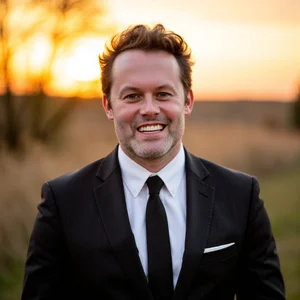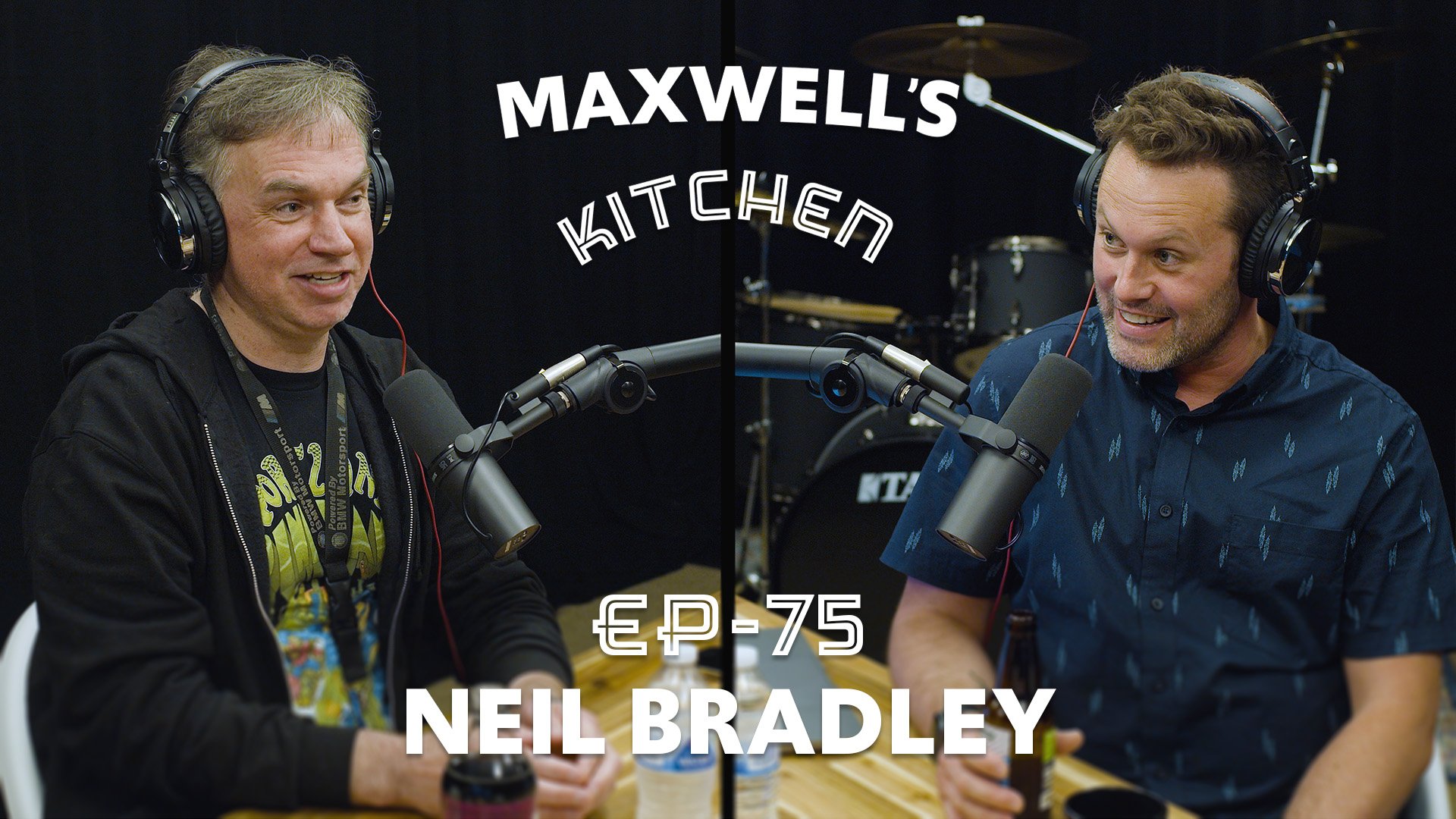
Neil Bradley has the kind of résumé that makes you wonder whether he has secretly been living several lives at once.
He grew up playing with some of the earliest home computers, taught himself programming before computer science was a normal career path, started at Intel answering technical-support calls, moved into engineering, collected arcade machines, helped buy Ground Kontrol in Portland, learned how to keep decades-old video games and pinball machines running, built a private recording studio, and somehow also found time to study music production with Alan Parsons.
I did not even get to the car racing until after we stopped recording.
In this episode of Maxwell’s Kitchen, Neil explains how those pieces fit together. What starts as a conversation about old computers becomes the story of Ground Kontrol, the mechanics and economics of running a classic arcade, the strange problems that come with preserving obsolete technology, and eventually a long detour into synthesizers, recording studios, Pink Floyd, Rush, vinyl, MIDI, and what Neil learned watching one of his musical heroes work.
In This Episode
Early home computers and video games
TRS-80, Apple II, and Commodore 64
Teaching himself BASIC and assembly language
Starting at Intel in 1989
Computer pranks and corporate security
Moving from technical support into engineering
Software and hardware testing
Buying Ground Kontrol
Portland arcade history
Classic arcade games and pinball
Killer Queen and indie games
How Ground Kontrol chooses games
Repairing vintage arcade machines
Fabricating obsolete parts
3D printing replacement components
The economics of running an arcade
Free-play nights
Surviving the pandemic
Training younger arcade technicians
Management and mentorship
Piano and electronic music
MIDI and synthesizers
Recording studios
Vinyl versus digital audio
Pink Floyd, Rush, Depeche Mode, and industrial music
Meeting Alan Parsons
Learning how Alan Parsons approaches a mix
The Beatles and recording technology
Guest
Neil Bradley
Neil Bradley is a Portland native, engineer, musician, and one of the owners of Ground Kontrol, the classic arcade and bar in downtown Portland.
His background in software and electronics made him unusually well suited to a business built around machines that were already old when he bought them. Long before Ground Kontrol, Neil was learning computers at a time when getting a program often meant opening a magazine and typing the code into the machine yourself.
That curiosity eventually took him to Intel.
It also explains a lot about what happened afterward.
Learning Computers Before There Was Much to Learn From
Neil got his first computer, a TRS-80 Model I, in 1978 when he was nine years old.
There was no YouTube tutorial. There was no Stack Overflow. There was barely a consumer computer industry.
If you wanted to figure something out, you read magazines, found books, talked to somebody who knew more than you did, and started experimenting.
Neil remembers magazines printing entire programs that readers could type into their computers line by line. That was part entertainment and part education. He started with BASIC, moved into assembly language, and became fascinated with the idea that the machine would do exactly what you told it to do if you could figure out how to ask correctly.
The attraction was not really business.
It was puzzles.
Neil had always liked building things, taking things apart, and understanding how complicated systems worked. Computers simply offered a machine with almost unlimited opportunities to do that.
Star Wars helped.
Seeing R2-D2 as a kid and learning from his father that a robot was essentially being controlled by a computer expanded the possibilities considerably. Computers were not just boxes displaying text. They could eventually control things in the physical world.
Video games were arriving at almost exactly the same time.
The Intel Prank That Helped Make Him an Engineer
Neil started at Intel in 1989 answering technical-support calls for computer expansion boards.
He was also apparently not particularly interested in behaving himself.
One of the best stories in the episode involves Intel installing antivirus software that ran a complete scan whenever employees restarted their computers. For engineers and support staff constantly rebooting machines while troubleshooting, that could mean sitting around for 15 or 20 minutes before getting back to work.
Neil complained.
Nothing changed.
So he wrote his own solution.
He created a program that hid most of the computer's directories from the virus scanner, allowing the scan to finish almost immediately. He passed it around on floppy disks, other employees copied it, and soon engineers around Intel were using Neil's homemade workaround to defeat the company's own security software.
Management was not thrilled.
Engineering was.
The stunt earned him a serious lecture about corporate security, but it also put Neil on the radar of engineers who recognized that the guy answering support calls clearly understood more than the job required.
He moved into test engineering, wrote software for validating hardware, worked with mentors who taught him to think about both electronics and code, and eventually became an engineer himself.
He never finished the degree he had been pursuing at Portland State.
By then he already had the job.
How an Intel Engineer Ends Up Owning an Arcade
Ground Kontrol did not begin with Neil sitting down and writing a business plan for a Portland arcade.
He was a customer.
He liked classic video games, collected arcade and pinball machines himself, and eventually began placing some of his own games at Ground Kontrol in exchange for a share of the revenue.
At the time, the business was trying to be several things at once. It had arcade games, video rentals, classic consoles, and live shows without a completely clear identity tying everything together.
When the original owner started talking about selling, Neil and several friends began wondering whether they could buy it.
Their first offer went nowhere.
A couple of years later, the opportunity returned, and in 2003 the group purchased the goodwill and assets of Ground Kontrol for about $58,000.
There was no giant investment fund behind it. Neil talks about borrowing against his 401(k), pooling money with the other owners, and essentially deciding, "Let's buy an arcade."
Then they had to figure out how to make one work.
Finding What Ground Kontrol Was Supposed to Be
One of the first decisions was figuring out what did not belong.
Video rentals disappeared.
More games came in.
Live shows lasted a little longer, but the owners discovered that people trying to play arcade games did not necessarily want a loud band competing for the room, while people who came for the concert did not care much about playing Galaga.
Trying to run two incompatible businesses at once was not helping either one.
The arcade became the focus.
Ground Kontrol eventually moved into its downtown Portland location near the Roseland Theater, inside an old building with enough history that Neil discovered language in the lease restricting horses and pinball machines.
The pinball restriction had apparently survived from the era when pinball was associated with gambling.
This is the sort of problem you only encounter when opening a modern arcade in a very old Portland building.
The new location also gave Ground Kontrol room to become something more distinctive: classic video games, pinball, drinks, music, newer indie games, and the weird nostalgia that comes from seeing a machine you have not touched since you were 12 years old.
The Product Is Nostalgia
Neil makes an observation about Ground Kontrol that explains why the business works better than calling it a room full of old video games.
The real product is nostalgia.
Everyone is nostalgic for something.
For one person, that might be an arcade cabinet from the late 1970s. Somebody younger might have the same reaction to a game from the '90s. As time keeps moving, the definition of "classic" moves with it.
Ground Kontrol can have Asteroids, pinball, Killer Queen, modern independent games, and newer machines in the same room without losing the idea because the experience is bigger than any one generation of hardware.
It is also social.
People come in with friends, drink, play something they remember, discover something they do not, and compete in a way that sitting alone with a console does not quite reproduce.
That combination turned out to be a pretty durable business model.
Keeping 40-Year-Old Machines Alive
Owning classic arcade games creates another problem.
They break.
A lot.
Neil compares repairing old games to working on old cars, which is probably the easiest way to understand it. A modern arcade machine may contain relatively familiar computer hardware. A machine from 1980 can require troubleshooting power supplies, individual RAM chips, old circuit boards, CRT monitors, switches, mechanical parts, and electronics that nobody manufactures anymore.
Pinball can be even worse.
A game may need some bizarre custom plastic gate, bracket, ramp, light board, or mechanical piece that existed only for that specific machine.
If the manufacturer no longer makes it, Ground Kontrol still has to find a way to keep the game alive.
Sometimes another company produces a modern replacement board. Sometimes the technicians improvise a repair. Neil's wife became involved in custom fabrication and could design replacement pieces or brackets, including parts made with 3D printing.
That preservation work is one of the most interesting parts of the Ground Kontrol story.
These are entertainment machines, but they are also artifacts of a particular period in electronics. Keeping them operational requires knowledge that becomes rarer as the machines get older.
Teaching the Next Person How to Fix It
Ground Kontrol does not expect to magically find technicians who already know how to repair every arcade cabinet and pinball machine in the building.
They train them.
Neil likes hiring people who are interested enough in how the machines work that they want to learn. Someone might start because they bought their own pinball machine and realized they had no idea what to do when it broke.
That curiosity is enough to begin.
Neil had mentors when he was learning computers and electronics, and he talks about feeling a responsibility to provide that same opportunity to younger people. Watching somebody move from knowing almost nothing to being capable of diagnosing and repairing complicated equipment is one of the parts of management he actually enjoys.
His philosophy is that a manager should be a helper.
Hire smart people, give them what they need, and get out of the way enough for them to become better at the job.
That sounds simple.
It is surprisingly rare.
Then the Conversation Turns Into a Recording Session
About an hour into an episode ostensibly about Ground Kontrol, Neil reveals that he is also a classically trained pianist who spent years obsessed with recording and electronic music.
Of course he is.
Computers and music arrived in his life at almost the same time, so when MIDI appeared, the two interests collided naturally. Neil became fascinated with synthesizers, sequencing, recording equipment, and the ability to use technology to build music piece by piece.
His tastes move all over the place: Alan Parsons, Pink Floyd, Rush, Kraftwerk, Jean-Michel Jarre, Depeche Mode, industrial music, metal, progressive rock.
He worked briefly in a recording studio when he was younger but had the same realization I had after studying recording years later: loving recorded music does not necessarily mean you want to spend your life recording somebody else's band.
The fascination with production never left him.
Meeting Alan Parsons
Alan Parsons is one of Neil's musical heroes.
So when Neil discovered that Parsons was offering recording master classes at his studio in California, the decision was uncomplicated.
He paid the money and went.
Neil describes Parsons as exactly the person you hope your hero turns out to be: kind, curious, generous with his knowledge, and willing to sit in a room with musicians and recording obsessives explaining how he approaches the work.
The master classes allowed Neil and the other participants to work with multitrack recordings associated with the Alan Parsons Project and hear how individual pieces fit together.
The biggest surprise was how Parsons built a mix.
Neil had generally thought about mixing from the rhythm section up, starting with drums and bass and then adding everything else. Parsons often approached it in almost the opposite direction, building around guitars and other instrumentation before bringing in the bass and drums later.
His explanation was essentially that the rhythm section was what finally made it rock.
Neil went home and listened to his own recordings differently.
That is what good teaching does.
You leave seeing something you thought you understood from another angle.
Computers, Arcades, Music, and the Same Basic Obsession
By the end of the conversation, the different pieces of Neil's life do not seem quite as unrelated as they did at the beginning.
Early computers, Intel engineering, arcade machines, synthesizers, recording studios, pinball repair, and even the way he talks about management all come from the same instinct.
He wants to know how things work.
Not just enough to use them.
Enough to get inside them.
When Neil was nine, that meant typing programs into a TRS-80 because there was no easier way to learn.
At Intel, it meant writing his own solution when the company software annoyed him.
At Ground Kontrol, it means keeping machines alive decades after the companies that built many of their components stopped supporting them.
In music, it means pulling apart a mix and wondering why Alan Parsons made one instrument sit exactly where it does.
Apparently the answer to "What does Neil Bradley do?" is still a little difficult.
The easier answer might be that he finds complicated things and starts figuring them out.
Useful Links
Ground Kontrol Classic Arcade and Bar
https://groundkontrol.com/
Watch This Episode on YouTube
https://youtu.be/SzEMVI2Hm8k
More Interviews
Recording Bands, Audio Engineering, and Studio Life with Adam Lee
https://maxwellskitchenpodcast.com/maxwells-kitchen-podcast/2023/02/28-episode-108-adam-lee
Jackpot! Recording Studio engineer Adam Lee goes much deeper into the world Neil and I wander into during the second half of this conversation: recording bands, analog tape, Pro Tools, studio psychology, microphones, budgets, and what actually happens when people try to turn songs into records.
Aaron Draplin on Graphic Design, Field Notes, Nike & Working for Yourself
https://maxwellskitchenpodcast.com/maxwells-kitchen-podcast/2022/06/30-episode-aaron-draplin
Aaron Draplin comes at creative independence from a completely different industry, but the overlap is there: building things yourself, learning by doing, working with people you trust, turning an obsession into a business, and trying not to lose the reason you liked the work in the first place.