Portland’s music scene in the early 1990s was a very different thing.
Local bands could pack La Luna on a Monday night. A record store called Locals Only sold tapes and records made by people who lived down the street. Bands built audiences by actually playing shows, putting out records, making flyers, and hoping somebody cared enough to tell somebody else.
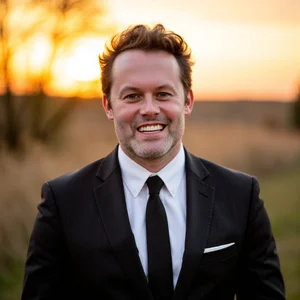
Sam Coomes was right in the middle of it.
Sam is a musician, songwriter, producer, and multi-instrumentalist best known as one half of Quasi with Janet Weiss. He was also a member of Heatmiser, toured and recorded with Elliott Smith, and has spent decades working with musicians including Jon Spencer and the HITmakers, Built to Spill, Jandek, The Go-Betweens, and others.
In this episode of Maxwell’s Kitchen, we talk about Portland’s underground music scene, the early days of Quasi, Heatmiser, touring with Elliott Smith, recording at Jackpot!, making a living as a musician, streaming royalties, live music, songwriting, production, and what happens when you manage to keep doing this for decades.
In This Episode
Portland’s music scene in the early 1990s
La Luna and the Pine Street Theater
Why Portland supported local bands
The punk-rock community around independent music
How the internet changed music culture
Quasi and Janet Weiss
Heatmiser
Touring and recording with Elliott Smith
Larry Crane and Jackpot! Recording Studio
Record deals and CD-era royalties
Streaming and musician income
Publishing rights and record ownership
Why live performance still matters
Songwriting and unusual chord progressions
Playing guitar, bass, and keyboards
Producing records
Jon Spencer and the HITmakers
Touring internationally
Technical riders and life on the road
Creativity after decades of making music
Guest
Sam Coomes
Sam Coomes is a Portland-based musician, songwriter, producer, and multi-instrumentalist.
He is best known as a founding member of Quasi with drummer Janet Weiss. Sam has also played with Heatmiser, toured and recorded with Elliott Smith, worked with Jon Spencer and the HITmakers, and contributed to records and performances by a long list of other artists.
His career stretches across several generations of Portland and Pacific Northwest independent music, from the club scene of the late 1980s and early 1990s through the rise of streaming and the radically different music industry that exists now.
La Luna and Portland’s Early-’90s Music Scene
The conversation starts with La Luna.
Before that name, the building was the Pine Street Theater. Sam remembers first visiting Portland after playing a show with the Dharma Bums while he was still living in San Francisco.
When he walked into the Pine Street Theater and saw a local Portland band drawing a huge, enthusiastic crowd, it immediately felt different.
In San Francisco, Sam says local bands often struggled to get much attention. Touring bands were taken seriously. Local bands could play for years without building much of an audience.
Portland had something else going on.
There was a real sense of local pride. La Luna eventually became one of the centerpieces of that scene, along with smaller clubs like Satyricon and the X-Ray Cafe.
For a period, La Luna even held Monday shows where admission was one dollar. Local bands that may have been almost completely unknown outside Portland could sell the place out.
It is difficult to imagine that now.
You could not follow every band on Instagram, watch last night’s show on YouTube, or stream every record they had ever made before deciding whether to leave the house.
If you liked a band, you went to the show.
That was the experience.
Quasi, Heatmiser, and Elliott Smith
Sam’s early Portland bands eventually led to Quasi.
He and Janet Weiss first played together in Motorgoat before that project evolved into Quasi. At roughly the same time, Sam was also playing in Heatmiser.
That connected him directly to Elliott Smith.
Sam played bass in Heatmiser and later became part of Elliott’s touring bands after Elliott left the group. When Elliott toured with a full band, Sam was regularly there playing bass.
Some of that work also moved into the studio.
Sam talks about songs developing while they were touring, rehearsing parts in hotels or on the road, and then recording them when opportunities came up.
The conversation gets especially interesting when we talk about how quickly Elliott’s career changed.
One period involved small clubs and people Sam already knew from Portland’s underground scene. Suddenly the rooms were getting bigger, the crowds were changing, and Elliott’s career had moved into something completely different.
Sam was watching that happen from inside the touring band.
How the Music Business Changed
A huge portion of this episode is really about the disappearance of an entire business model.
Sam came up in a world where a band could write songs, rehearse, play local shows, build an audience, release records, get press, tour, and gradually move forward.
There was a recognizable path.
It was difficult, but you could see it.
CD sales also mattered.
Sam explains that bands could make real money from physical records. Depending on the deal, selling a CD could put several dollars back into the band.
Streaming changed that equation completely.
Music became easier to access than at any point in history, but the value of the individual recording collapsed for many working musicians.
Sam talks about watching that transition happen in real time.
The original pitch was appealing: put the music online and suddenly anyone in the world can discover you. More listeners should mean more fans, more people buying records, and more people coming to shows.
Instead, for many artists, streaming replaced the record sale without replacing the income.
That left touring and merchandise carrying much more of the financial burden.
Heatmiser, Publishing, and Record Ownership
Heatmiser becomes an interesting example of how complicated ownership can get.
Sam talks about the band’s final record and the publishing rights connected to songs written by Neil Gust and Elliott Smith.
Interest in Elliott continued growing after Heatmiser ended, which created demand for older material.
But owning the music, owning the publishing, performing on the record, and having the legal ability to reissue something are not necessarily the same thing.
That leads into a broader conversation about record contracts, publishing, streaming royalties, and the strange reality that the people who made a piece of music may not always control what happens to it later.
It is one of the less romantic parts of being a professional musician.
Why Live Music Still Matters
For all of Sam’s frustration with streaming, he still loves playing live.
And he still goes to shows as a fan.
That matters.
Recorded music can be repeated forever. You can pause it, restart it, skip a song, look up the set list, or watch another performance online.
A live show only happens once.
Sam describes that as part of the magic. The music is physically happening in the room. You have to pay attention because you cannot rewind the moment that just passed.
There is also something that happens when a band is genuinely locked together that is difficult to explain.
Every musician contributes something different, and the result becomes larger than the individual parts.
That is one of the reasons Sam still values rock bands as a form.
The people matter.
How Quasi Writes Music
One of the things I wanted to understand was why Quasi’s songs often go somewhere I do not expect them to go.
The chord progressions do not always resolve the way conventional rock or pop suggests they should.
Sam’s explanation is almost disappointingly simple.
He is largely self-taught.
He knows conventional progressions, but his relationship with keyboards developed through experimentation rather than formal training. That limitation can also become an advantage because he does not always approach the instrument the way a traditionally trained keyboard player might.
Sam plays guitar, bass, keyboards, and other instruments, but the instrument itself is only part of the process.
The larger goal is still the song.
Recording and Production
Sam also has experience producing records, which brings the conversation into the studio.
We talk about Larry Crane and Jackpot! Recording Studio, where Sam has worked in different capacities over the years.
Producing someone else’s music requires a different perspective than producing your own band.
Sometimes the producer’s most useful role is simply being the person who can stand outside the music and hear what everybody inside the project has stopped hearing.
That can mean arrangement decisions.
It can mean helping musicians make choices.
It can also mean extremely unglamorous work like scheduling, negotiating studio rates, finding equipment, and keeping the entire project moving.
Turns out Rick Rubin lying on a couch is not the whole job.
Touring for a Living
Later, Sam explains what touring actually looks like after doing it for most of his adult life.
Quasi has toured extensively throughout North America, Europe, Japan, Australia, and elsewhere.
Some cities are better than others, except sometimes the city you expect to be terrible is incredible and the city you expect to be great is dead.
That unpredictability is part of the job.
The financial math matters too.
Flights, hotels, vehicles, crew, sound engineers, food, equipment, and venue costs all affect whether a tour actually makes sense.
Even something as boring as having food on the rider can make a significant difference when a band has spent all day driving, walks directly into a venue, unloads equipment, soundchecks, and then performs.
At that point, chips and hummus start looking less like rock-star excess and more like dinner.
Staying a Working Musician
The thing I like most about this conversation is that Sam does not romanticize the career.
There were years when touring and recording were enough to support him.
There have also been side jobs.
There have been great shows, terrible shows, unstable years, successful records, difficult periods, and decades of figuring out how to keep the numbers working well enough to continue making music.
By the time we recorded this conversation, Sam had something he valued just as much as touring.
A home.
A family.
A place to return to when the tour ends and he can stop being the guy on stage for a while.
After decades of music, that balance seems to matter.
Useful Links
Quasi Official Website
https://www.quasiband.net/
Quasi on Sub Pop
https://www.subpop.com/artists/quasi
Jackpot! Recording Studio
https://jackpotrecording.com/
More Music Interviews
Music Millennium, Vinyl Records, and Record Store Day with Terry Currier
https://maxwellskitchenpodcast.com/maxwells-kitchen-podcast/2022/12/12-episode-99-terry-currier
Terry Currier approaches some of the same changes from the record-store side: Portland music history, La Luna, physical media, Napster, streaming, vinyl, and what happened when the way people discovered and bought music changed.
Recording Bands, Audio Engineering, and Studio Life with Adam Lee
https://maxwellskitchenpodcast.com/maxwells-kitchen-podcast/2023/02/28-episode-108-adam-lee
Adam Lee takes the conversation inside Jackpot! Recording Studio to explain recording bands, analog tape, Pro Tools, producers, engineers, studio psychology, and what actually happens when musicians try to turn songs into records.