Most of us only see firefighters during the worst few minutes of somebody’s day.
We hear the sirens, watch the engines go by, and occasionally see crews working an emergency. What happens before and after that is mostly invisible.
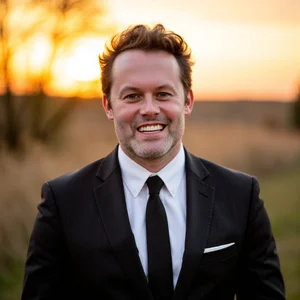
Don Porth spent 27 years with Portland Fire & Rescue as a firefighter, EMT, public educator, and fire-prevention specialist. After retiring, he continued researching and documenting the history of Portland’s fire service.
In this episode of Maxwell’s Kitchen, Don explains what it actually takes to become a firefighter, how a 24-hour shift works, what happens inside a fire station between calls, how crews divide responsibilities at an emergency, and what years of responding to fires, crashes, medical emergencies, and deaths can do to the people answering those calls.
Then we go backward.
Way backward.
Don takes us through Portland fire history from volunteer companies in the 1800s to horse-drawn equipment, early firehouses, the creation of a paid department, and the 1873 fire known as Black Saturday that destroyed 22 blocks of the city.
In This Episode
Becoming a professional firefighter
Firefighter testing and physical requirements
Probation and training
Working as a team under pressure
24-hour firehouse shifts
What firefighters do between emergency calls
Fire engines versus fire trucks
Ladders, ventilation, forcible entry, and rescue
Paramedics and medical calls
Fire boats and specialized rescue units
Fire station life and meals
Why firefighters clean and maintain their own stations
Dispatch and emergency response
Fire hydrants and water supply
What causes a backdraft
Vehicle crashes and rescue equipment
CPR and medical emergencies
The emotional toll of firefighting
Line-of-duty deaths
Fire prevention and public education
The Historic Belmont Firehouse
Portland’s volunteer fire companies
Early firefighting equipment
The creation of Portland’s paid fire department
Black Saturday and Portland’s 1873 fire
How firefighter schedules changed over time
Long-term health risks for firefighters
Guest
Don Porth
Don began in the fire service in 1980 as a student and volunteer firefighter in Happy Valley, Oregon.
After going through the competitive testing process, he became a paid Firefighter/EMT in Salem before joining Portland Fire & Rescue in 1984.
He spent the next 27 years with Portland Fire & Rescue.
Don worked on the front line before moving into the Fire Marshal’s Office and public education, where much of his career focused on community safety, youth fire-setting behavior, fire prevention, and education.
He also helped develop the Safety Learning Center at the Historic Belmont Firehouse and has spent years researching and preserving the history of Portland Fire & Rescue.
What It Takes to Become a Firefighter
Getting hired is not as simple as filling out an application and proving you can carry a hose.
Don explains the testing process, which can involve written exams, physical-agility testing, interviews, training, and an extended probationary period.
Physical ability matters, but that is only part of it.
A firefighter has to function while tired, stressed, uncomfortable, and under pressure.
More importantly, the job depends on teamwork.
At an emergency, people need to know that the person beside them will do their job when things become difficult.
That makes the hiring and training process about more than strength or academic knowledge.
Can you make decisions under pressure?
Can you learn quickly?
Can you work inside a team?
Can other people rely on you?
Those questions matter when the consequences can involve somebody’s life.
What a 24-Hour Shift Is Actually Like
A typical Portland fire shift begins at 8 a.m. and ends at 8 a.m. the following morning.
The day starts with roll call and a rundown of what is expected for the shift.
Then comes something considerably less dramatic than television firefighting.
Housework.
Firefighters clean bathrooms, mop floors, maintain the kitchen, make beds, check equipment, and take care of the station.
These buildings are occupied around the clock by rotating crews. Some Portland stations have been in service for more than a century, and keeping them functional requires constant attention.
There may also be drills, inspections, community events, equipment checks, training, meals, and all of the ordinary work required to keep a station ready.
Then the alarm goes off.
Whatever everybody was doing stops.
Engines, Trucks, Rescues, and Different Jobs
One of the things I did not understand before this conversation was how different the equipment and crews can be.
A fire engine and a fire truck are not simply two names for the same thing.
Engines are primarily responsible for getting water to the fire. They carry pumps and hose and establish the water supply needed to attack it.
Truck companies perform different functions, including ladder work, forcible entry, ventilation, and rescue.
Portland also has paramedics, specialized rescue equipment, fire boats, and crews trained for unusual situations such as collapses or vehicles entering the river.
At a large emergency, all of those pieces have to work together.
There is no room for everybody to independently decide what seems like a good idea.
What Firefighters Actually Respond To
Fire is only part of the job.
Firefighters respond to medical emergencies, car crashes, rescues, hazardous situations, and calls that can range from routine to horrifying.
Don describes some of the realities that come with repeatedly seeing people injured or killed.
The difficult part is not always simply knowing somebody died.
Sometimes it is what the human body looks like after a serious fire or traumatic incident.
Those images do not necessarily disappear when the shift ends.
At the same time, firefighters also arrive during moments when immediate intervention can completely change the outcome.
CPR, emergency medical care, rescue work, and simply getting to someone quickly can give a person a chance they otherwise would not have had.
That combination is part of the job.
Some calls are devastating.
Others remind you exactly why the job exists.
Fire Prevention and the Belmont Firehouse
Don eventually spent much of his career in fire prevention, public education, and community outreach.
That created a different challenge.
Portland has an enormous number of schools, neighborhoods, businesses, and residents. Sending educators to individual classrooms and community events takes a tremendous amount of time.
Don began thinking about reversing the process.
Instead of taking fire-safety education everywhere, what if there were a place where people could come to learn?
An opportunity appeared when Portland’s 1912 Belmont firehouse was vacated after a new station was built.
The old building became the home of the Safety Learning Center.
The idea was not simply to fill a firehouse with old equipment and call it a museum.
The history could be used to teach people why fires happen, how the fire service developed, and what people can do to reduce their own risk.
That project also helped deepen Don’s interest in Portland fire history.
Before Portland Had a Professional Fire Department
Portland firefighting began long before radios, engines, protective equipment, or a professional department.
Early fire companies were volunteer organizations.
When a fire started, people had to alert the station and summon volunteers. Before modern communications, that could mean bells, people running to the station, or simply following the smoke.
Fire stations became community gathering places partly because having people nearby meant there were volunteers available when something happened.
Early Portland was also extremely vulnerable to fire.
Buildings were largely made of wood.
Sidewalks were wood.
The city developed along the river around lumber, mills, shipping, and other industries that depended heavily on combustible materials.
A fire could move very quickly.
Black Saturday
Portland found that out in 1873.
The city had already experienced a major fire in December 1872.
Then came August 2, 1873.
The day became known as Black Saturday.
Hot, dry weather and strong winds helped push the fire through Portland, eventually destroying 22 city blocks.
The destruction stretched through a significant portion of what was then the commercial city.
It is strange to look at Portland now and imagine a fire moving through block after block with firefighters trying to stop it using the equipment and water systems available in the 1870s.
But fires like that helped shape what came next.
Fire departments became more organized.
Equipment improved.
Water systems improved.
Building practices changed.
Eventually Portland moved from volunteer companies toward a professional paid department.
Firefighter Life Has Changed Too
The equipment was not the only thing that changed.
Early paid firefighters effectively lived at the station.
Don describes schedules that sound ridiculous by modern standards, including periods when firefighters worked seven days a week with only limited hours away from the station.
Gradually those schedules evolved.
So did the expectations surrounding training, medical response, safety equipment, prevention, and the long-term health of firefighters themselves.
The modern fire service is a completely different operation from the volunteer companies that protected Portland in the 1800s.
But the basic job is recognizable.
When something has gone terribly wrong, somebody has to go toward it.
Useful Links
Portland Fire History
https://www.portlandfirehistory.com/
Historic Belmont Firehouse
https://www.portland.gov/fire/belmont-firehouse-museum
Portland Fire & Rescue
https://www.portland.gov/fire