Human trafficking is usually discussed in simple terms. The reality is much harder to define, measure, and solve.
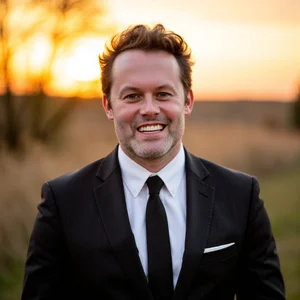
Dr. Christopher Carey has spent more than 20 years researching human trafficking and working with law enforcement, government agencies, nonprofits, survivors, and communities in the United States and abroad. He is also a former deputy district attorney and an Associate Professor of Criminology and Criminal Justice at Portland State University.
In this episode of Maxwell’s Kitchen, Chris explains what trafficking actually looks like, why the numbers are difficult to calculate, how people can be controlled without being physically restrained, and why sex trafficking is only one part of a much larger problem.
We also get into the difference between trafficking and smuggling, consensual sex work, prostitution laws, harm reduction, Portland’s local trafficking research, foster care, drug policy, homelessness, democracy, free speech, and social media.
In This Episode
Human trafficking in the United States and abroad
Labor trafficking and sex trafficking
Why trafficking statistics are difficult to measure
Commercial sexual exploitation of children
Coercion, manipulation, isolation, and trauma
Human trafficking in Portland and Oregon
Human smuggling versus human trafficking
The Trafficking Victims Protection Act
Sex work versus trafficking
Prostitution laws and decriminalization
Harm reduction
Fentanyl and Oregon drug policy
Homelessness and social services
Money in politics and Citizens United
The First Amendment and free speech
Social media and echo chambers
Foster care and exploited youth
Survivor advocacy and recovery
Guest
Dr. Christopher Carey, PhD, JD
Associate Professor of Criminology and Criminal Justice at Portland State University
Chris is a former deputy district attorney whose research and teaching include human trafficking, human rights, criminal law, vulnerable populations, migration, and governance.
His work has included research and community engagement in the United States and internationally, along with collaborations involving law enforcement, government agencies, social-service organizations, and nonprofits.
What Human Trafficking Actually Looks Like
One of the first things Chris explains is that trafficking is extremely difficult to count.
Researchers are dealing with hidden populations, which means estimates can vary depending on who is counted, how cases are identified, and whether the data comes from law enforcement, social services, nonprofits, or other sources.
Another misconception is that trafficking always means sex trafficking. Labor trafficking, domestic servitude, forced criminal activity, agricultural work, and other forms of exploitation can all fall under the same broader problem.
The control does not always look obvious either.
A person may be trapped through threats, financial dependence, isolation, confiscated documents, manipulation, trauma, or fear. That helps explain why asking, “Why didn’t they just leave?” misses a lot of what is actually happening.
Trafficking, Smuggling, and Sex Work
Chris also breaks down the difference between human smuggling and human trafficking.
Smuggling generally involves someone voluntarily paying another person to help them cross a border. Trafficking involves exploitation through force, fraud, coercion, or circumstances in which someone cannot legally consent. A situation can begin as smuggling and later become trafficking.
We also spend a significant part of the episode talking about consensual adult sex work and why it should not automatically be treated as trafficking.
Chris discusses different approaches used around the world, including prohibition, decriminalization, legalized and regulated sex work, and the Nordic model, where selling sex may be legal while buying it is not.
There is no easy consensus.
Advocates, researchers, sex workers, survivors, governments, and law-enforcement agencies can reach very different conclusions about which approach reduces harm and exploitation.
Portland, Trauma, and Intervention
Chris has participated in research examining commercial sexual exploitation in Portland and explains why official criminal cases only capture part of what is happening.
Some people may interact with nonprofits, social workers, foster-care systems, healthcare providers, or other agencies without ever becoming part of a criminal prosecution.
The conversation becomes especially important when we talk about young people who have experienced exploitation.
Severe trauma can affect trust, relationships, behavior, housing stability, and someone’s willingness to accept help. That is why Chris pushes back on the idea that an untrained person can simply identify someone being trafficked and “rescue” them.
The first contact matters.
Effective intervention can involve survivor advocates, law enforcement, social workers, mental-health professionals, shelters, healthcare providers, and other trained services working together.
Wanting to help and knowing how to help are not the same thing.
Harm Reduction, Politics, and Free Speech
The second half of the conversation expands into a broader discussion about how society responds to difficult problems.
Chris talks about the difference between downstream solutions and upstream ones. A downstream response happens after something has already gone wrong. Upstream approaches try to reduce the conditions that make those outcomes more likely in the first place.
That leads us into homelessness, addiction, harm reduction, Oregon Measure 110, healthcare, housing, and social safety nets.
From there, the conversation moves into democracy, Citizens United, money in politics, the two-party system, and the First Amendment.
We also talk about social media and the way algorithms can reinforce what people already believe. Instead of exposing people to opposing viewpoints, platforms can create increasingly comfortable echo chambers because keeping users engaged is good for business.
It is a long way from where the episode begins, but the same question keeps coming up throughout the conversation: how do we deal with complicated human problems without pretending they have simple answers?
Useful Links
Dr. Christopher Carey at Portland State University
https://www.pdx.edu/faculty-experts/expert/christopher-carey
National Human Trafficking Hotline
https://humantraffickinghotline.org/
More Interviews
Sex Trafficking, Coercion, and Survivor Support | Janna Piper
https://maxwellskitchenpodcast.com/maxwells-kitchen-podcast/2023/04/05-episode-110-janna-piper-in-what-ways-does-sex-trafficking-exist-today
A complementary conversation about trafficking, vulnerability, coercion, and survivor advocacy.
Oregon Politics, Government, and Public Policy | Mark Gamba
https://maxwellskitchenpodcast.com/maxwells-kitchen-podcast/2022/05/06-episode-73-mark-gamba
A deeper conversation about government, elections, public policy, homelessness, and how political systems respond to difficult problems.
Psychotherapy, Trauma, and Mental Health | Dr. Adam Rodriguez
https://maxwellskitchenpodcast.com/maxwells-kitchen-podcast/2022/09/20-episode-90-dr-adam-rodriguez
Another conversation about trauma, psychology, behavior, and the complicated ways people respond to their circumstances.